



Breakout Hitters Redefining MLB Props in 2026
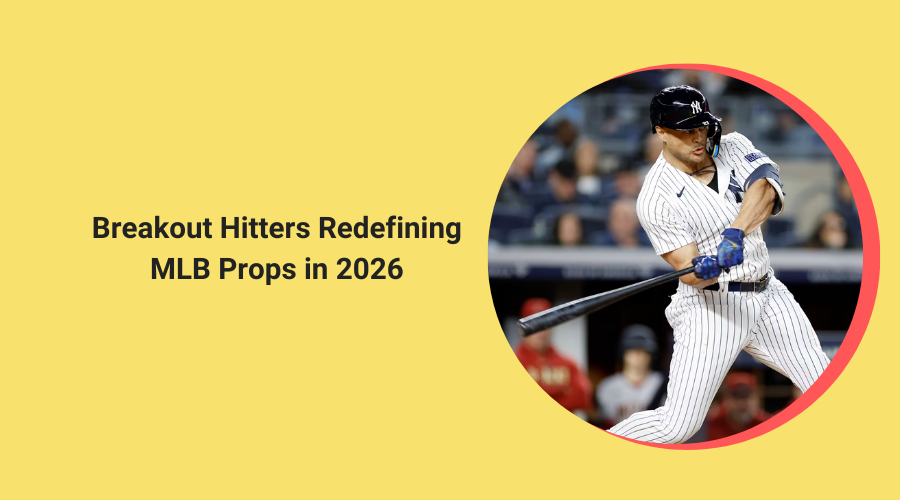
Every MLB season introduces a fresh class of emerging talent, but 2026 feels different. Front offices are promoting hitters earlier, trusting advanced metrics and refined development pipelines. For fans who track daily markets and season-long projections, that shift is transforming how player props are set and evaluated.
Breakout hitters no longer arrive flying under the radar. They bring elite plate discipline, measurable exit velocity data, and minor league track records that demand attention from day one.
Prop markets, especially early in a debut season, often need time to adjust to these profiles. That adjustment period creates volatility in hits, total bases, stolen bases, and award futures.
Five hitters in particular stand out in 2026. Each represents a different version of emerging talent, and each is reshaping how MLB props are priced across sportsbooks.

150% Bonus - Reduced Juice

$250 in Free Bets

$750 Bonus - Tons of Betting Options
Kevin McGonigle
Team: Detroit Tigers
Kevin McGonigle enters 2026 as the rare contact-first prospect whose statistical profile immediately challenges the hits markets. Across three minor league levels, he posted elite walk-to-strikeout ratios across three levels, underscoring elite strike-zone control. In an era defined by swing-and-miss power, that discipline stands out.
For prop setters, players like McGonigle are difficult to calibrate early. Hit totals often rely on historical strikeout rates and batted-ball volatility. McGonigle’s ability to control at-bats compresses that volatility. When sportsbooks post early numbers, including markets like FanDuel MLB props, they may initially lean on conservative projections before fully pricing in his contact reliability.
Historically, debut hitters with near-even or positive walk-to-strikeout ratios outperform modest hit projections during their first months. McGonigle’s all-fields approach and zone coverage create steady ball-in-play opportunities. That type of emerging talent forces the prop market to react quickly once consistent multi-hit performances begin to stack.
Konnor Griffin
Team: Pittsburgh Pirates
Konnor Griffin represents a different challenge entirely. He combines elite athleticism with measurable power, creating nightly exposure across multiple prop categories. In his first professional season, he swiped 65 bases while registering exit velocities north of 114 mph, an uncommon blend of speed and force.
That dual-threat profile splits attention between stolen base props, total bases, and even home run markets. Add in a sub-24% strikeout rate during his Double-A stint, and Griffin looks closer to MLB-ready than many power-speed prospects before him. Early lines may struggle to balance that versatility.
Emerging talent with both high-end sprint speed and top-tier exit velocity data often reshapes pricing quickly. Griffin can impact a game without leaving the yard, which makes single-category projections incomplete. When sportsbooks attempt to isolate one dimension, his multi-faceted production can create mismatches in how total production is evaluated.
Sebastian Walcott
Team: Texas Rangers
Sebastian Walcott embodies the modern high-ceiling hitter. As a teenager facing advanced competition, he demonstrated hard-contact metrics typically seen in established big leaguers. A 115 mph exit velocity in spring against MLB-caliber pitching signals legitimate raw power, not just projection.
For prop markets, that kind of measurable strength often translates to early underpricing in extra-base hit and total base categories. Statcast-era bettors track exit velocity closely because it stabilizes faster than batting average. Walcott’s ability to drive the ball deep fits that profile.
There is, however, a variable to monitor. His near-50% ground-ball rate introduces volatility into power outcomes. If that rate holds, hit markets may offer a steadier angle than total bases. Emerging talent like Walcott often forces bettors to differentiate between contact frequency and launch profile when evaluating daily lines.
Colt Emerson
Team: Seattle Mariners
Colt Emerson doesn’t headline highlight reels the way some peers do, but his production profile consistently stands out. Posting an .842 OPS across three levels before turning 21 demonstrates adaptability and polish. Even during a brief Triple-A cameo, he recorded double-digit hard-hit balls in limited action.
This type of emerging talent often flies under the radar in prop markets. Emerson’s approach emphasizes contact quality and situational hitting rather than raw power spikes. That steadiness can make his hits and total bases props more predictable during early MLB exposure.
MLB statistics show that high-OBP hitters with multi-level success historically translate well to debut seasons. Emerson’s left-handed swing path and plate coverage reduce prolonged slumps, a key factor when sportsbooks set conservative opening lines. While he may not command the same buzz as a power-speed prospect, his balanced skill set creates consistent nightly opportunity.
JJ Wetherholt
Team: St. Louis Cardinals
JJ Wetherholt may be the most complete profile among this class of emerging talent.
His versatility immediately impacts multiple markets, but one stands above the rest: NL Rookie of the Year futures. Award odds respond quickly to balanced contributors who influence games in diverse ways. Wetherholt’s blend of contact, patience, power, and speed gives him a sustained statistical runway.
Players with near-equal walk and strikeout rates historically adjust faster to major league pitching. With a Spring 2026 arrival timeline, the Rookie of the Year window is already active. As sportsbooks update futures boards, Wetherholt’s all-around profile positions him at the forefront of this evolving prop landscape.
The 2026 Prop Landscape Belongs to Emerging Talent
The common thread among these five hitters is not hype; it is measurable skill. Emerging talent in 2026 arrives with data-backed profiles that translate quickly to MLB production. That reality compresses the adjustment window for sportsbooks and reshapes how props are evaluated.
Contact specialists challenge hit totals. Power-speed athletes stretch multi-category exposure. Teen phenoms influence total bases markets. Polished bats steady daily projections. Complete five-tool profiles shift award futures.
For fans tracking MLB props this season, the key story is adaptation. As these hitters settle in, lines will evolve. But early in a debut year, the gap between projection and performance can be the most intriguing space on the board, and 2026 offers plenty of it.


Chat
Rules
The goal of chat is to talk sports and sports betting! Help each other by sharing picks and having a good time!
Below will not be tolerated
You can chat about most things to a certain extent. Exception is absolutely NO talking about Religion or Politics.
- There will be NO talking about others or their families
- There will be NO name calling.
- There will be NO rambling on or repeating the same thing over and over.
- There will be NO racist or sexist comments.
- There will be NO posting of other websites.
Basically treat others the way you would like to be treated.
Break the rules

- 1st warning a 24 hour ban
- 2nd warning 7 day ban
- 3rd warning a lifetime ban

Follow us on:


Copyright © 2026 www.centsports.com
